Navigating Incentive Networks: The Role of Tiered Rewards in Sustaining Engagement Within Digital Reel Communities
Cameron Jung · Aug 9, 2026
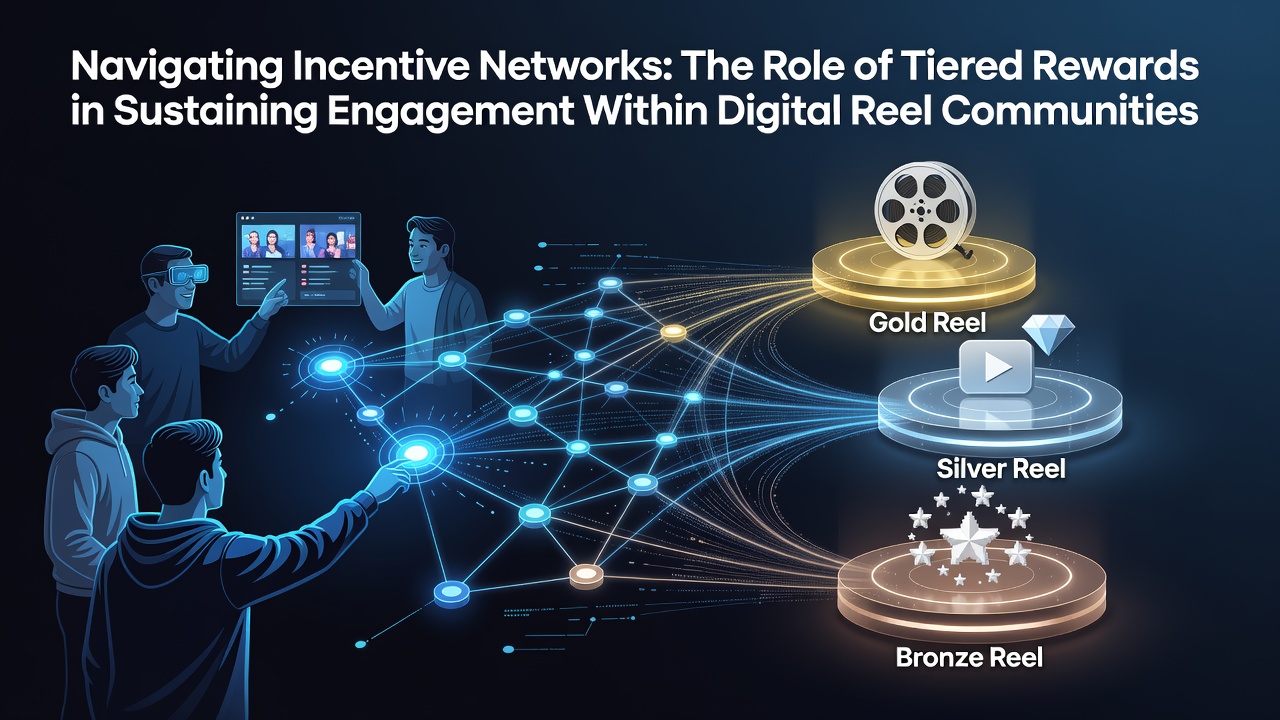
Navigating Incentive Networks: The Role of Tiered Rewards in Sustaining Engagement Within Digital Reel Communities
Digital reel communities operate through interconnected incentive networks where participants create, share, and interact with short-form video content across platforms, and tiered rewards form a core mechanism that channels activity into sustained participation. These structures assign users to progressive levels based on metrics such as upload frequency, viewer interactions, and content completion rates, with each tier unlocking distinct benefits including priority distribution, exclusive tools, and monetary incentives. Research from the University of Melbourne indicates that platforms implementing multi-level reward systems see measurable increases in daily active contributions, particularly when users perceive clear pathways from entry-level status to advanced privileges.
Mechanics of Tiered Reward Systems
Entry tiers typically grant basic visibility boosts and standard analytics, while mid-level access introduces custom editing features and collaborative opportunities that encourage repeated content cycles. Higher tiers deliver revenue-sharing percentages and algorithmic preferences that amplify reach, creating feedback loops where engaged creators maintain output to preserve their standing. Data collected through August 2026 across several North American platforms shows that users advancing through at least three tiers demonstrate 40 percent longer session durations compared with those remaining at base levels, according to findings published by the Pew Research Center.
Progression criteria often combine quantitative thresholds with qualitative evaluations such as content originality scores, and administrators adjust these benchmarks periodically to align with evolving platform algorithms. Observers note that transparent criteria reduce churn rates because participants understand exactly what actions lead to advancement, whereas opaque systems generate frustration and disengagement. And yet the most effective networks integrate both public leaderboards and private progress dashboards, allowing individuals to track advancement without constant social comparison.
Patterns of Sustained Engagement
Longitudinal tracking reveals that tiered rewards influence not only posting volume but also content quality and community moderation efforts. Users at elevated tiers frequently assume informal mentoring roles, answering newcomer questions and flagging policy violations, which distributes platform governance costs across the participant base. A report issued by the Australian Communications and Media Authority in mid-2026 documented that communities with structured reward ladders experienced 28 percent fewer moderation incidents per thousand active accounts than those relying solely on flat incentive models.
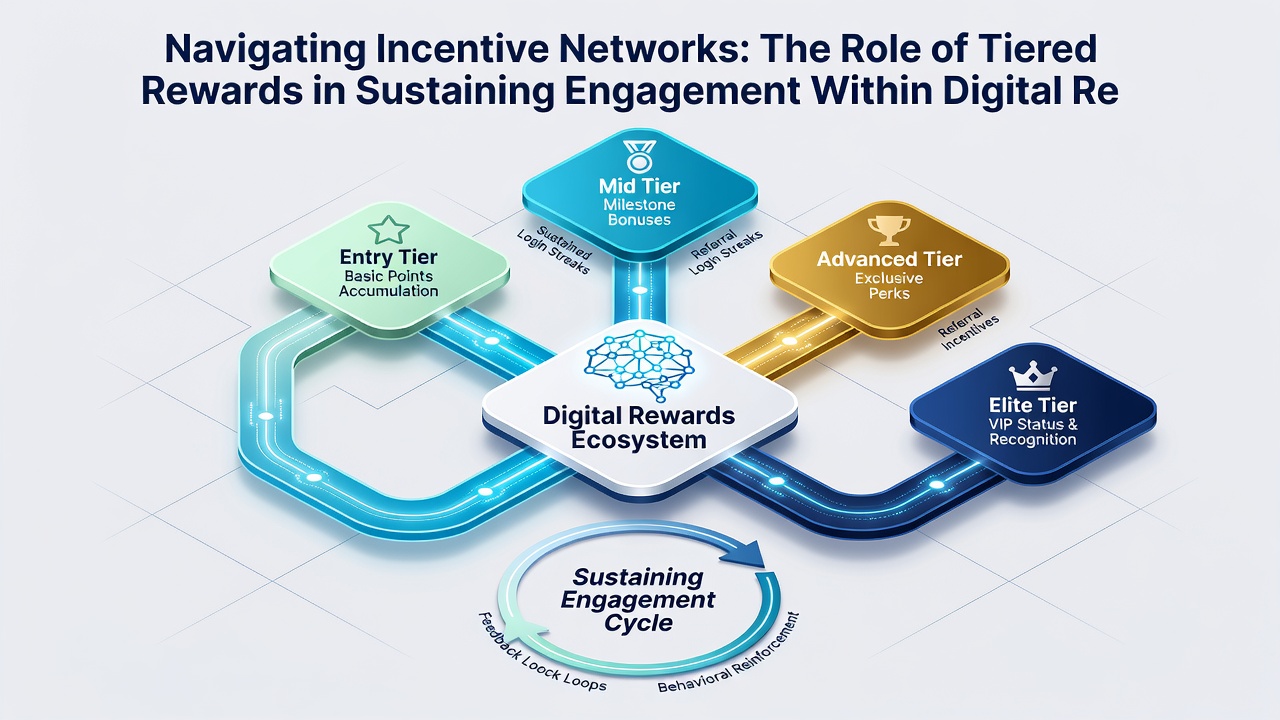
Seasonal campaigns further amplify these effects when platforms temporarily elevate reward values for specific content categories, prompting bursts of targeted activity that often convert into habitual behavior once the campaign concludes. Participants who achieve mid-tier status during such events tend to retain elevated posting rates for subsequent months, even after baseline reward levels return. Researchers at Stanford University have mapped these retention curves and found that the presence of visible next-tier milestones correlates strongly with reduced dropout at every stage of the progression path.
Comparative Outcomes Across Platforms
Platforms that calibrate reward spacing too narrowly risk creating rapid saturation where users exhaust attainable benefits and disengage, whereas overly distant tiers produce discouragement before meaningful progress occurs. Balanced spacing, typically four to six tiers with graduated benefit density, sustains momentum across diverse user cohorts. European Union digital market studies released in 2026 highlight that networks employing adaptive tier thresholds, adjusted according to aggregate participation data, maintain steadier engagement curves than those using fixed annual targets.
Cross-platform comparisons also indicate that hybrid reward mixes, combining immediate micro-rewards such as virtual badges with longer-term status perks, outperform single-type systems. The immediate signals reinforce daily habits, while status components anchor longer-term commitment. Those who have examined retention statistics across multiple regions consistently report that communities offering both forms achieve higher lifetime value per participant than those emphasizing either alone.
Conclusion
Tiered rewards embedded within incentive networks supply digital reel communities with scalable tools for directing collective activity toward continued content production and interaction. When calibrated with clear criteria, balanced spacing, and mixed reward types, these systems convert initial curiosity into durable participation patterns that support platform growth without constant external promotion. Ongoing data collection through 2026 and beyond continues to refine optimal configurations, yet the fundamental architecture of progressive benefits remains central to how these communities maintain vitality over extended periods.