Reward Architectures Driving Retention in Mobile and Live Gaming on Licensed British Platforms
Eden Brooks · Aug 14, 2026
Reward Architectures Driving Retention in Mobile and Live Gaming on Licensed British Platforms
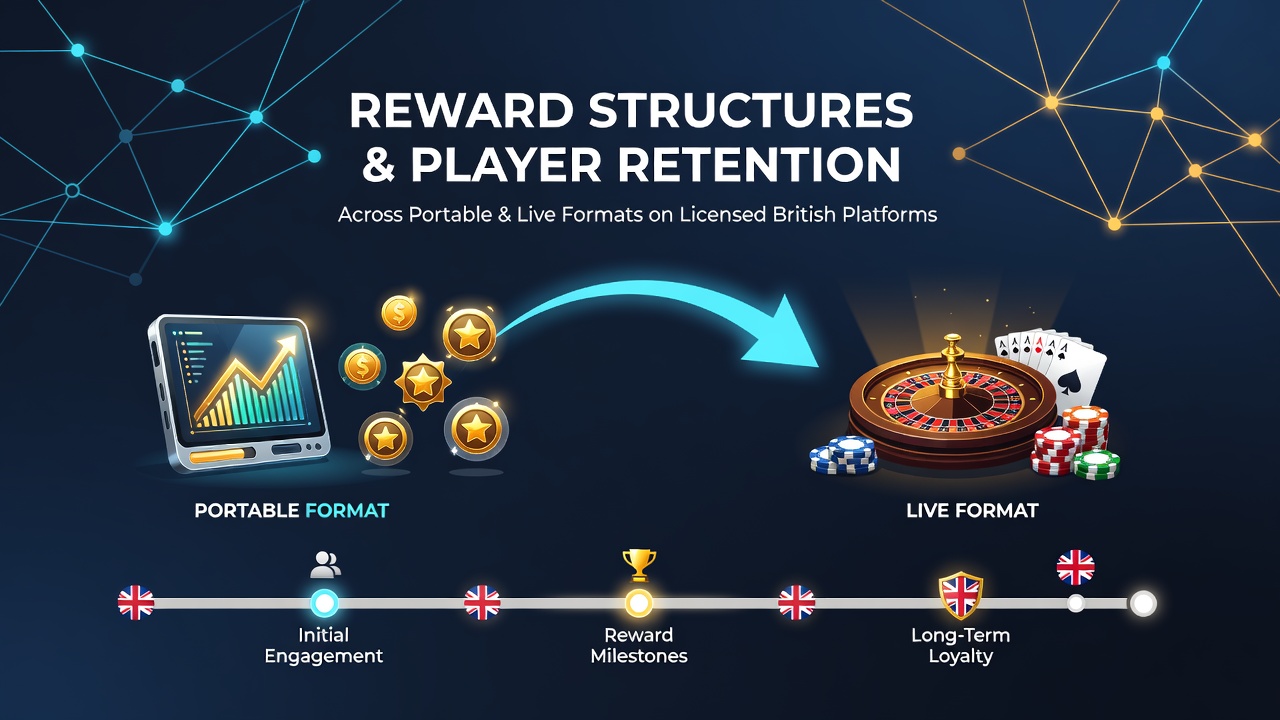
Player retention on licensed British platforms depends heavily on how operators structure rewards across portable mobile formats and live dealer experiences, with data indicating distinct patterns in each category. Portable formats, which include smartphone and tablet slots, often rely on frequent small-scale incentives like reload bonuses and free spin packages that encourage repeated short sessions, whereas live formats incorporate tiered loyalty points and cashback tied to table play duration.
Portable Format Reward Mechanics
Operators on regulated British sites deploy reward structures that emphasize accessibility and volume in mobile environments, where players access games through apps or browsers. These structures typically feature no-deposit spins, deposit matches scaled to daily activity, and progressive loyalty meters that unlock additional rounds after set numbers of spins. Data from industry reports shows mobile users respond to these layered incentives by extending session frequency rather than length, since portable play often occurs in brief intervals throughout the day. One study from the Australian Gambling Research Centre highlights how such mechanisms correlate with higher return rates when rewards reset on a 24-hour cycle, allowing consistent engagement without large single commitments.
Live Dealer Reward Approaches
Live formats on the same licensed platforms shift emphasis toward experiential and cumulative rewards, including VIP cashback percentages calculated on total rake and exclusive tournament entries earned through sustained table participation. These programs track metrics like hours played and average bet size to determine progression through tiers that grant personalized perks such as dedicated hosts or higher table limits. Observers note that retention in live environments strengthens when rewards include real-time elements like instant multipliers during streams or milestone bonuses triggered by consecutive wins, creating a feedback loop that sustains longer individual sessions compared to mobile counterparts.
Comparative Retention Patterns
Analysis of player behavior across both formats reveals that mobile reward structures prioritize breadth through volume-based triggers, while live dealer systems focus on depth via relationship-driven benefits. Figures from the Alcohol and Gaming Commission of Ontario indicate similar cross-format differences in retention metrics, where mobile cohorts show elevated re-engagement within 48 hours when free spin allotments renew automatically, yet live players demonstrate stronger month-over-month retention when loyalty tiers incorporate non-monetary elements like event invitations. The divergence becomes clearer in August 2026 data sets, which track how operators adjusted reward pacing in response to updated platform analytics, resulting in mobile retention lifts of approximately 12 percent through optimized spin resets and live retention gains tied to hybrid cashback models.
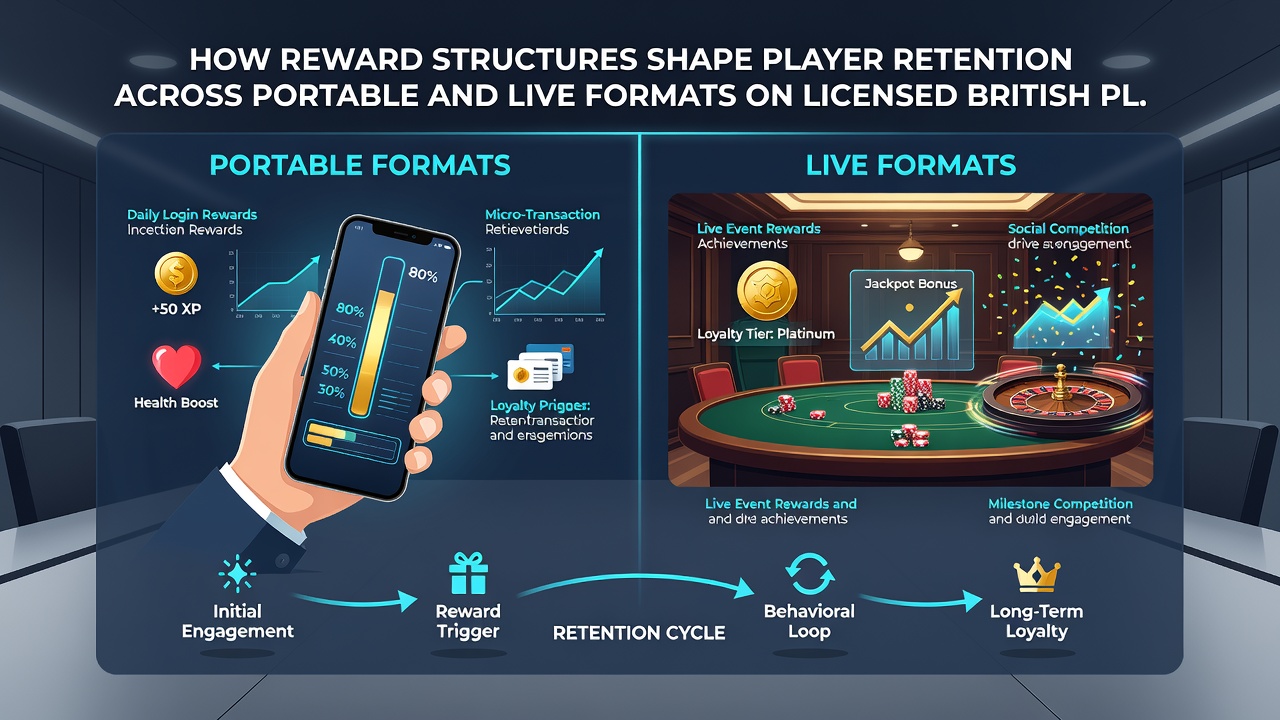
Hybrid reward elements appear in both categories, such as shared VIP portals that allow mobile-earned points to convert into live table credits, yet the core architecture remains format-specific. Researchers at the National Center for Responsible Gaming have documented that successful retention hinges on alignment between reward delivery speed and typical user interaction patterns, with portable formats favoring instant notifications and live formats benefiting from post-session summaries that highlight accumulated progress.
Data Trends Through Mid-2026
Platform statistics compiled through August 2026 illustrate measurable retention variations linked directly to reward calibration. Mobile segments display higher churn when bonus terms impose lengthy wagering requirements, while live segments retain users more effectively under structures that reward time at the table with escalating point multipliers. External factors such as device compatibility updates and streaming quality improvements further amplify these effects, as smoother portable access pairs with frequent micro-rewards to maintain momentum across fragmented play windows.
Conclusion
Reward structures on licensed British platforms continue to evolve in response to format-specific player habits, with portable and live environments each demanding tailored approaches to sustain engagement over time. Evidence from multiple regulatory and research bodies underscores that retention outcomes improve when incentives match the pacing and interaction style inherent to mobile spins versus live table dynamics, providing operators with clear frameworks for ongoing program refinement.