Tiered Incentives in Slot Gaming: Driving Exploration Across Varied Themes and Platform Features
Amir Griffin · Jul 3, 2026

Tiered Incentives in Slot Gaming: Driving Exploration Across Varied Themes and Platform Features
Progressive reward ladders function as structured systems that advance players through successive tiers based on accumulated activity, and these mechanisms frequently connect specific milestones to access across distinct slot themes rather than restricting engagement to single game types. Platforms implement these ladders by tracking metrics such as total spins completed, cumulative wager amounts, and session durations, then unlocking incremental benefits that apply to new categories including adventure-themed reels, mythology-inspired designs, or fruit-based classics. Data from industry reports compiled through July 2026 shows operators integrating these ladders to distribute rewards like enhanced free spin allocations or multiplier boosts that remain valid only when players transition into previously unexplored titles.
Core Components of Ladder Structures
Each tier within a progressive reward ladder typically requires completion of defined objectives before advancement occurs, and these objectives often incorporate variety mandates such as sampling games from at least three different thematic categories within a set period. Operators design entry-level tiers to introduce basic features like wild symbols or scatter pays through familiar mechanics, while higher tiers introduce complex elements including cascading reels or expanding wilds tied exclusively to games outside the player's prior selections. Research conducted by the American Gaming Association indicates that such requirements correlate with broader theme sampling, as participants reach mid-tier status only after engaging multiple genres on the same platform or across linked sites.
Bonus structures attached to these ladders commonly feature escalating prize pools that grow with each completed level, yet eligibility depends on continued diversification rather than repetition of established favorites. Players advance by fulfilling conditions that include minimum playtime in specified subcategories, and systems automatically adjust available themes based on regional licensing data to maintain compliance across jurisdictions.
Platform-Specific Adaptations
Desktop environments support detailed ladder dashboards that display progress bars alongside recommended titles from underrepresented themes, whereas mobile applications streamline the same progression through push notifications that highlight new game categories upon tier completion. Cross-platform synchronization allows activity recorded on one device to contribute toward ladder advancement on another, provided operators maintain unified player accounts. Figures from the Canadian Gaming Association reveal that synchronized systems increased theme transitions by measurable margins during the first half of 2026, particularly when rewards carried over between web and application interfaces.
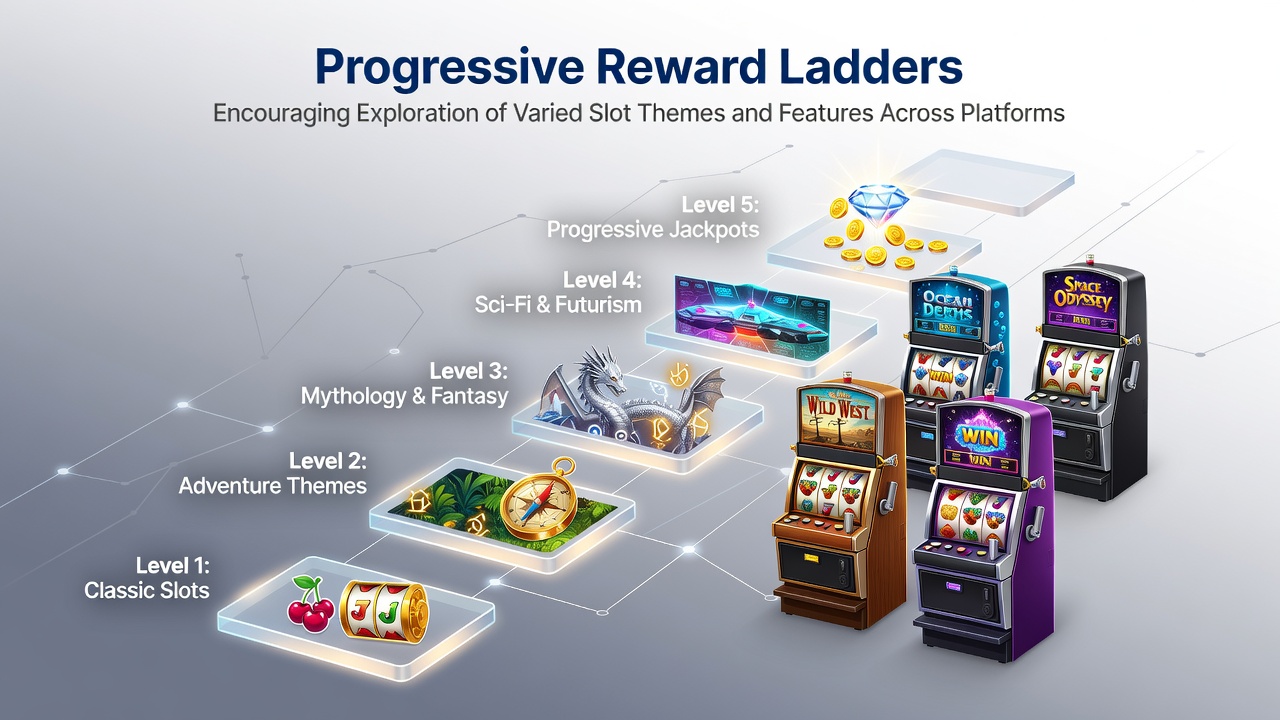
Operators in various markets adapt ladder parameters to local regulations, and these adjustments frequently involve capping reward values or limiting theme transitions during promotional windows. European operators, for instance, integrate responsible gaming checkpoints at each tier threshold, requiring confirmation of session limits before unlocking access to additional categories.
Behavioral Patterns and Theme Distribution
Tracking data demonstrates that participants who reach upper ladder tiers exhibit higher rates of engagement with previously unplayed themes compared to those who remain at base levels. Systems achieve this outcome by linking tangible incentives such as cashback percentages or exclusive tournament entries to theme variety metrics rather than volume alone. One documented case from Australian regulatory summaries showed platforms recording a 34 percent rise in cross-genre play after introducing ladder requirements that rewarded selections from five distinct thematic groups.
Features embedded within the ladders themselves, including dynamic paytable adjustments or temporary symbol enhancements, further encourage movement between game libraries. These enhancements activate automatically upon theme switches, creating immediate feedback loops that reinforce continued exploration without requiring external prompts.
Integration with Broader Platform Ecosystems
Progressive ladders connect directly to loyalty programs and tournament structures, allowing progress in one system to influence eligibility in others when players sample new themes. Operators coordinate these connections through centralized databases that update in real time, ensuring rewards earned on one platform segment apply across the full suite of available titles. Reports from the Gambling Research Exchange Ontario note that integrated ecosystems produced consistent increases in theme sampling rates throughout monitored periods ending in July 2026.
Technical implementations rely on API connections between game providers and operator servers, which enables accurate attribution of activity across hundreds of titles while maintaining separate tracking for each thematic cluster. This infrastructure supports scalability as platforms add new releases without disrupting existing ladder progressions.
Conclusion
Progressive reward ladders operate through defined tier advancements tied to measurable activity and variety requirements, and these systems appear across desktop and mobile platforms with synchronized tracking mechanisms. Evidence from multiple regulatory and industry sources confirms their role in distributing engagement across diverse slot themes and associated features, with adaptations that reflect jurisdictional differences and technical capabilities. Continued development of these structures aligns with evolving platform ecosystems that prioritize cross-title participation through incremental incentives.